Finishing 12th grade brings relief and a fair bit of uncertainty at the same time. Years ago, standing at that same crossroad, the choices felt pretty rigid — pick a three or four-year degree, commit to a fixed path, and hope the job market still wanted those exact skills by the time you graduated.
Things look different now.
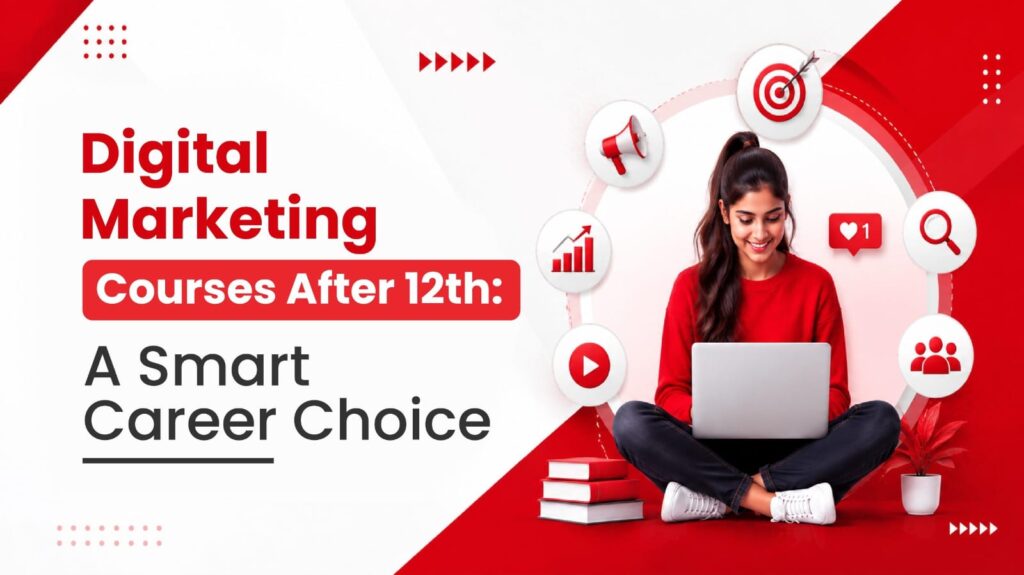
The internet stopped being a simple communication tool a while back — it’s the engine running global business at this point. Because of that shift, digital marketing courses after 12th have become one of the more practical, flexible choices a student can make. It gets you into a fast-moving industry early, one where actual performance and problem-solving matter a lot more than a framed degree on the wall.
Why This Makes Sense Right After School
Right out of 12th grade, your mind is still in the habit of absorbing new frameworks quickly — that alone gives you an edge over people who wait until after a three-year degree to start learning something practical.
Here’s why starting this early is genuinely worth it:
- You get to financial independence faster. Unlike degree programs where you’re years away from your first real project, digital skills let you take on freelance work, internships, or entry-level roles within months of actually practicing.
- What you can do matters more than your age or degree. Employers in this space care about output. If you can structure a clean website, run a campaign that actually converts, or write content people read to the end, your background becomes secondary pretty quickly.
- The skills travel with you. A furniture business, a healthcare clinic, a software company — doesn’t matter what they sell, they all need visibility online. Learning digital strategy gives you something that works across almost any industry you end up in.
The Core Skills Worth Learning First
If you’re starting from zero, a good program shouldn’t drown you in jargon on day one. It should build a solid base across the disciplines that actually drive growth online.
Search Engine Optimization (SEO) and Content Strategy
SEO is really about understanding how people search for answers. You learn to research actual search queries, structure content so it makes sense, and build pages that work for both a human reader and a search engine trying to rank it.
Social Media and Community Building
Modern social platforms run on trust, not just noise. You learn how different audiences behave across Instagram, LinkedIn, and YouTube, and how to create content that actually starts a conversation instead of getting scrolled past.
Performance Marketing and Paid Advertising
Organic reach matters, but paid ads — Google Search, Meta campaigns — let a business test an idea fast. You learn how budgets get spent, how targeting actually works, and how to track conversions accurately enough to know if the money was well spent.
Web Analytics and Data Literacy
Marketing without data is just guessing with extra steps. Understanding basic analytics means you can see where visitors come from, how long they stick around, and where they drop off — and use that to make calm, informed changes instead of random ones.
What SDMI Academy Focuses On
When SDMI Academy (Swarn Digital Marketing Institute) got started, the priority was building an environment where young learners could actually gain confidence, not just sit through lectures and hope something sticks.
Going straight from school into professional-level learning is a big jump, and dry theoretical classes don’t help with that. So the programs here stay away from that — small batches, real mentorship, and direct work on live projects instead of hypothetical case studies.
You’re not memorizing definitions for a test. You’re setting up actual campaigns, digging into real performance data, and building a portfolio that says something when you’re applying for a job or pitching a client — you can see how the courses are structured on the Digital Marketing Courses page.
How to Actually Approach This
Starting early doesn’t mean rushing through it. The people who end up genuinely good at this stay patient, stay curious, and build their knowledge one layer at a time.
- Start with the fundamentals. Understand audience psychology and clear communication before jumping into complicated ad platforms — the software is easy to learn once you actually get why people behave the way they do online.
- Build something yourself. A small blog, a niche social page, helping a relative’s business show up better in local search — nothing teaches you faster than running a live experiment with real (even if small) stakes.
- Keep learning, because the platforms won’t stop changing. Google updates its algorithm regularly, and platforms like Meta publish their own policy and product updates fairly often too. Staying observant and treating this as ongoing learning, not a one-time course, is what keeps your skills useful years down the line.
Taking Your First Step
Deciding what to do after 12th grade is really about laying groundwork for your own independence later. If you enjoy creative work, strategic thinking, and actually seeing the results of what you build, digital marketing is a career path with a lot of room to grow into.
To see how the mentor-led, practical programs at SDMI Academy can help you build these skills from scratch, take a look at sdmiacademy.com and explore what fits your starting point.
With steady practice, the right guidance, and a learning environment that doesn’t just talk theory, turning this into a real career is genuinely within reach.